
My Little Peace Corps Life: April 2017

Slightly late, but take a look at my top 10 pictures for April. This month was filled with adventures! In the beginning of the month I traveled to Japan with a few of my batchmates, then to Malapascua for Holy Week where I went SCUBA diving, and finally a weekend trip to a nearby cold spring to beat the summer heat.

10. Sunset ‘lakaw lakaw’ 

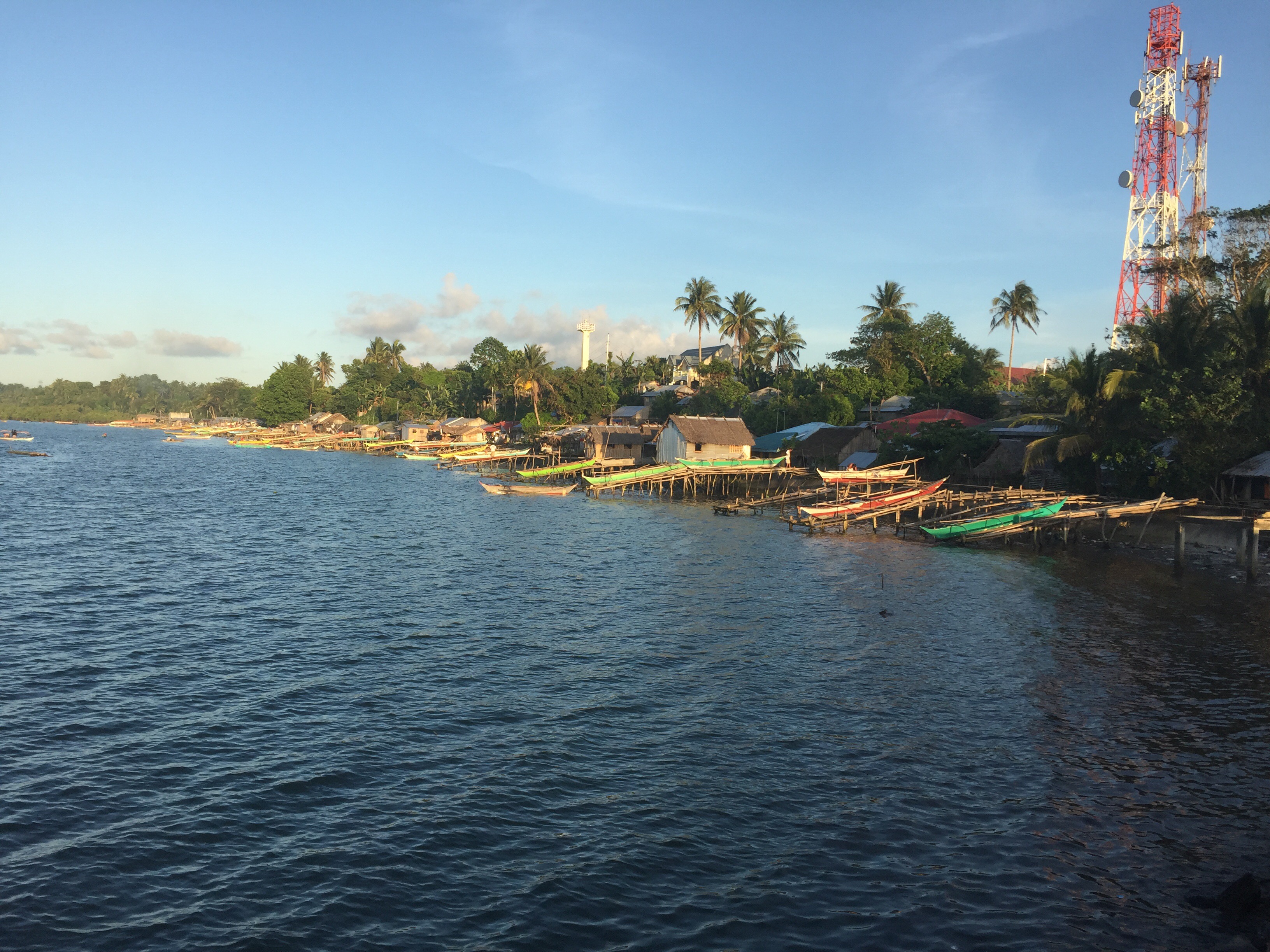
This is a picture of my little municipality as seen on one of my evening walks. The only times appropriate for ‘lakaw lakaw’ (walking) is early in the morning, or after the sun has begun to set. When I get home from work it’s too hot to stay in my apartment, so I wander down to the pier, and watch the sunset.

9. ‘Sarap an Tubig! 

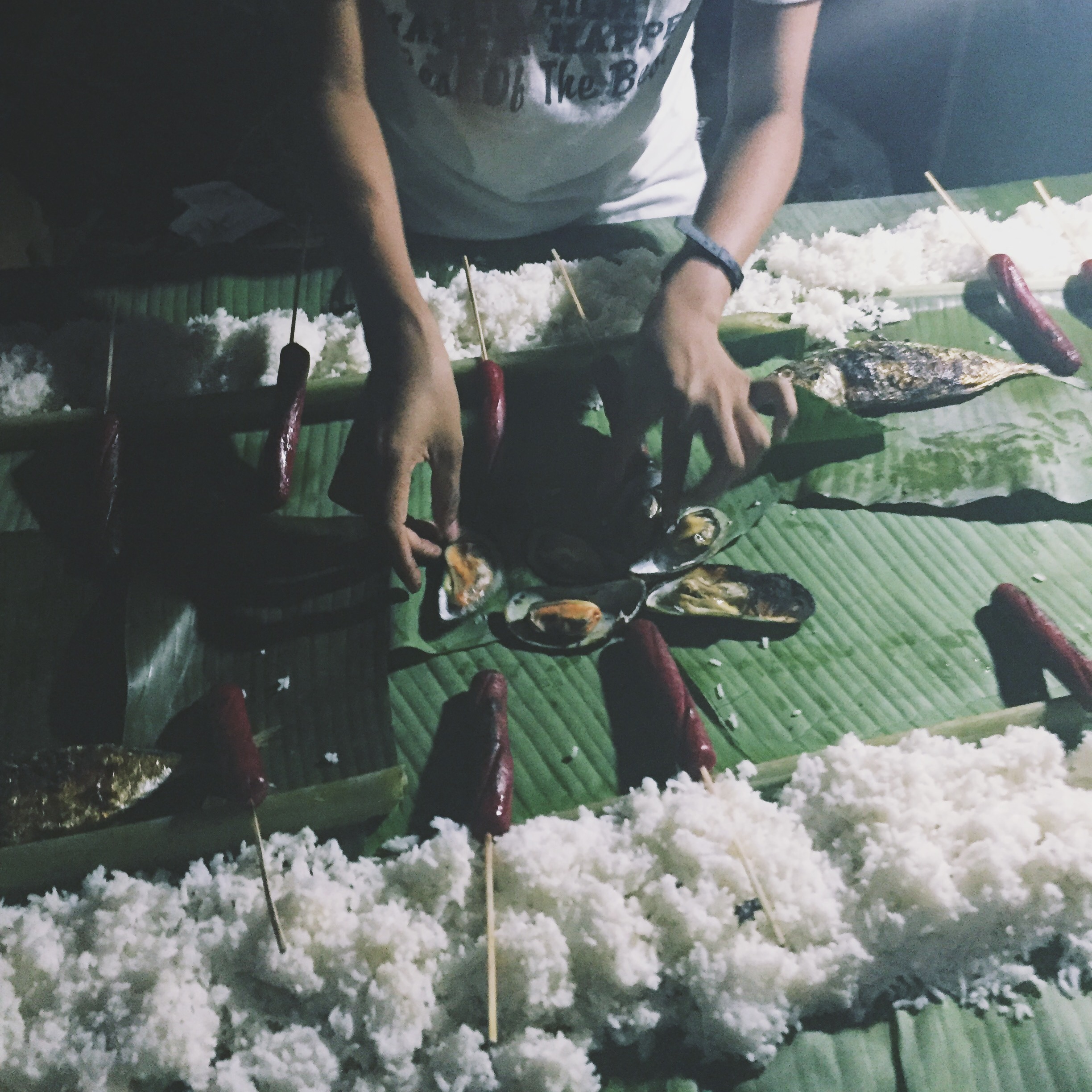
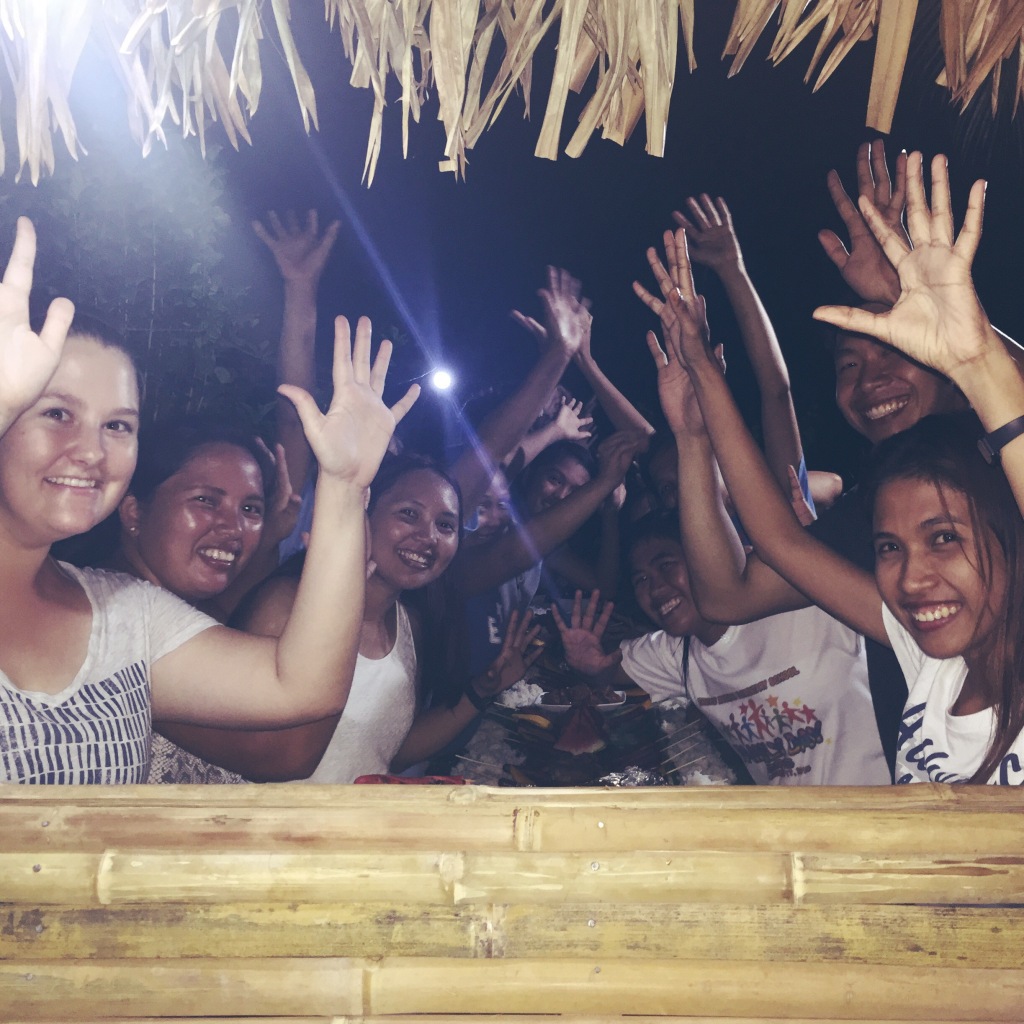
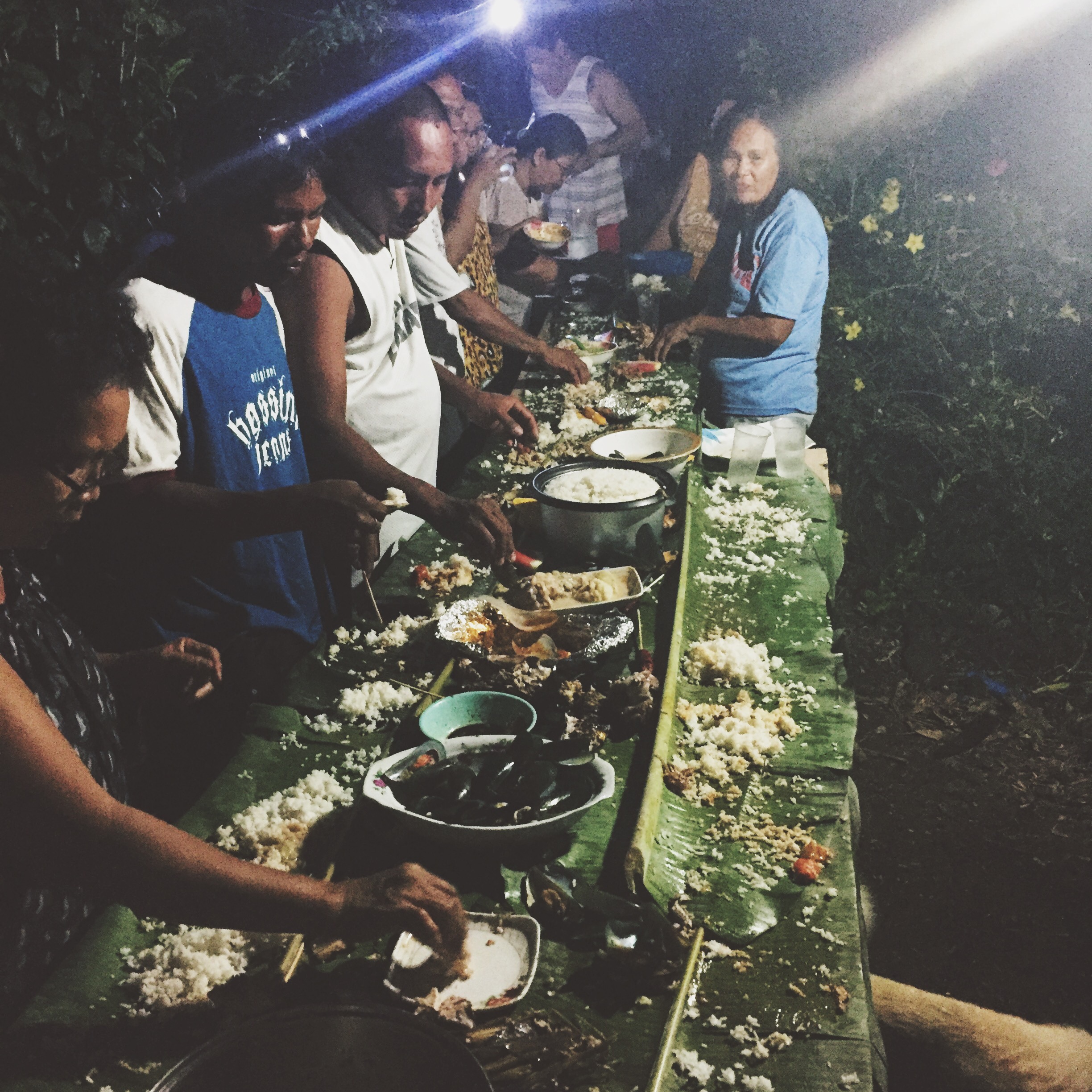
The only reasonable thing to do on the weekends this summer is swimming in the cold springs! ‘Sarap an tubig’ directly translates to ‘the water is delicious’ but is commonly used as an expression to say the water is refreshing. These day trips always include a large picnic spread of Filipino foods, and plenty of ‘karigos’ (bathing/swimming).

8. Holy Week in Malapascua

This little island took a jeepney, van, plane, taxi, bus, AND ferry to get to! Malapascua is world renowned for its thresher shark sitings!  100 feet underwater I stared into the murky seascape. My eyes were drawn to every shadow just trying to catch a glimpse of this deep sea shark’s distinct elongated caudal fin used for stunning prey.  Unfortunately with the terrible visibility we were unable to see any threshers.  Sayang, I still got to spend a nice holiday with my batchmates on this gorgeous island eating good food and sharing in fun times.

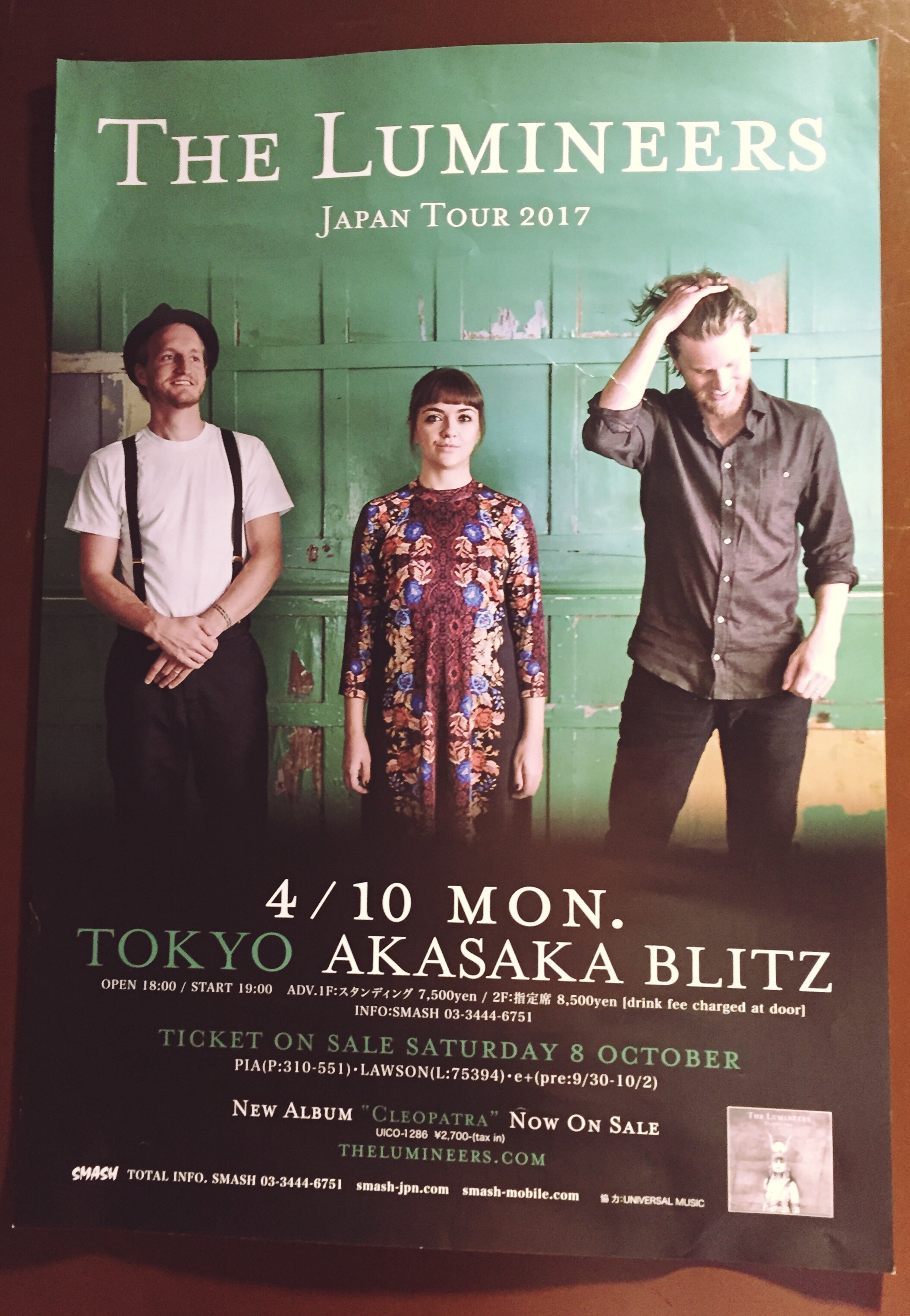
7. THE LUMINEERS IN TOKYO

The whole reason I ended up on this trip to Japan was to see this band play in Tokyo. A really amazing performance by one of my favorite bands.

6. Japan is old

We found a small Sake Brewery in Kawiguchiko that was being run by the same family for 21 generations. In addition to a fun brewery tour, the owners also gave us a tour of their house and pointed out these trees in their garden.  Some of the trees were nearly 400 years old!

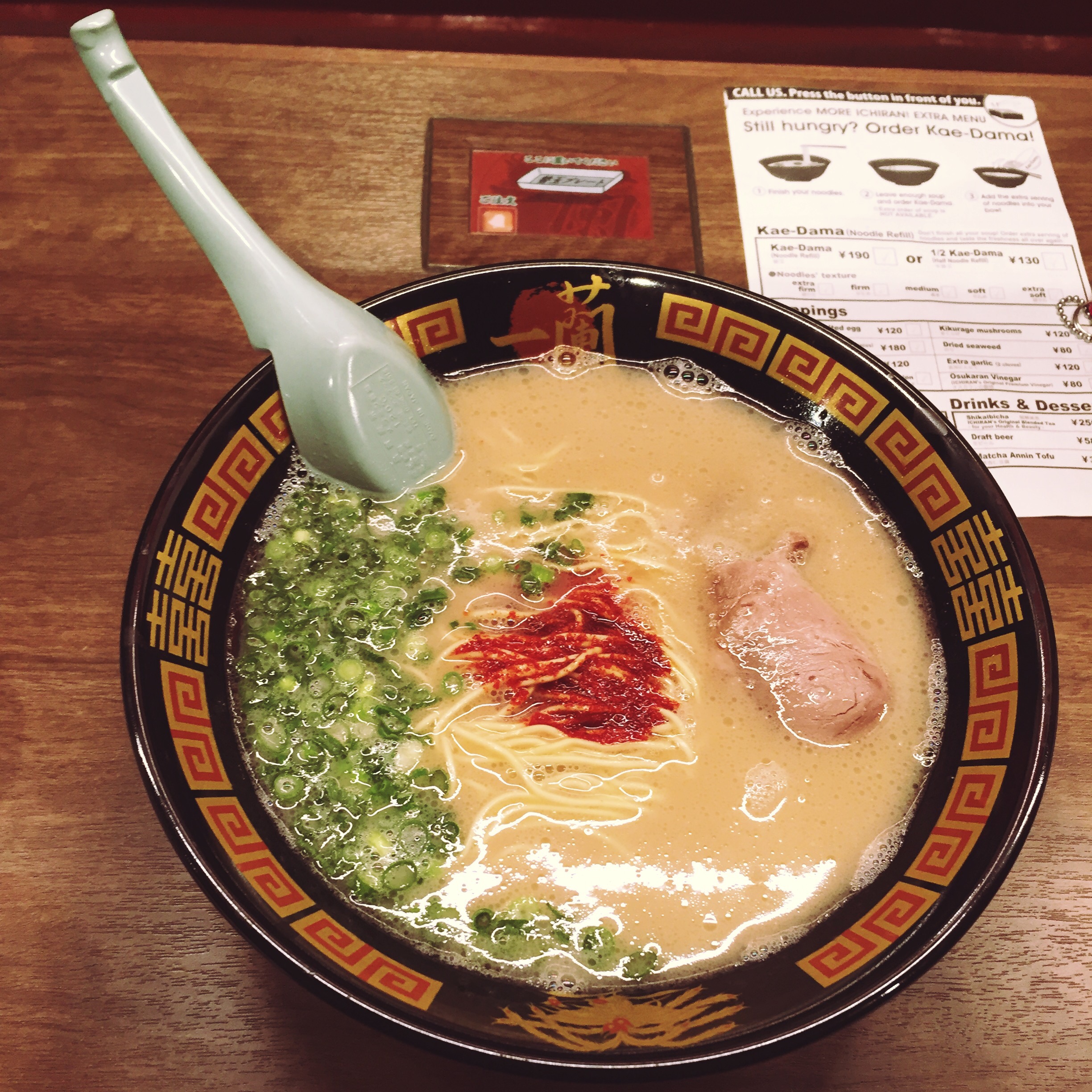
5. RAMEN! 

Hands down the best ramen I’ve ever had in my life. This restaurant was the epitome of Japan’s introverted culture.  You could eat an entire meal here without ever speaking or seeing someone’s face. A vending machine outside took your money, you sat in a single booth with a small window in front of you, filled out a form to specify how you wanted your ramen, there was a tap for water in your booth, and a person would push your ramen through the window when it was ready.

4. Who needs a new piranha?

We spent one afternoon wandering around a shopping center near our hostel. The array of items you could happen upon in these stores was astounding. Of all of them, this was my favorite find. Just a piranha in a fish tank….

3. Tourists kami

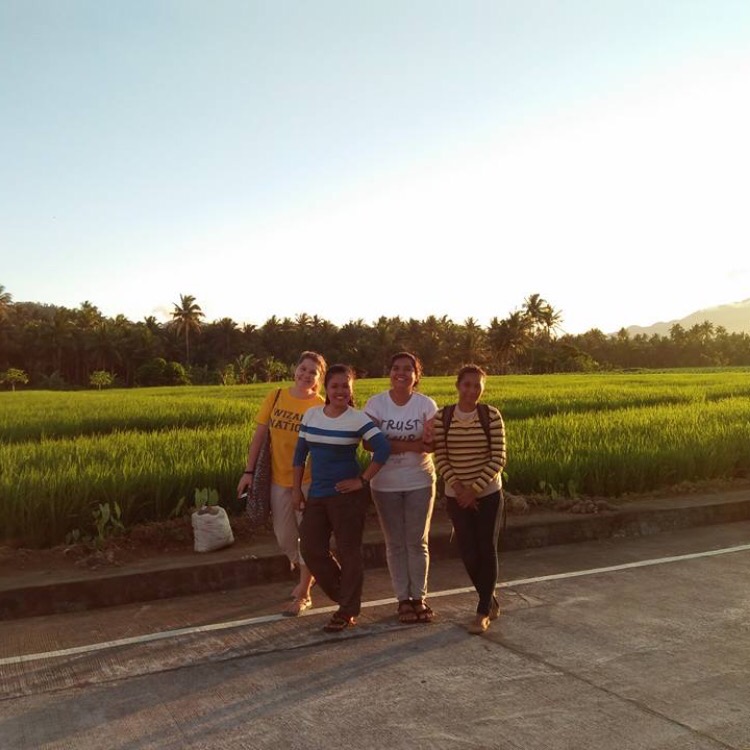
My travel buddies ☺️ we thoroughly enjoyed being tourists, freezing our butts off, drinking lots of sake, eating lots of sushi, and taking thousands of pictures of the cherry blossoms beginning to bloom in Tokyo.

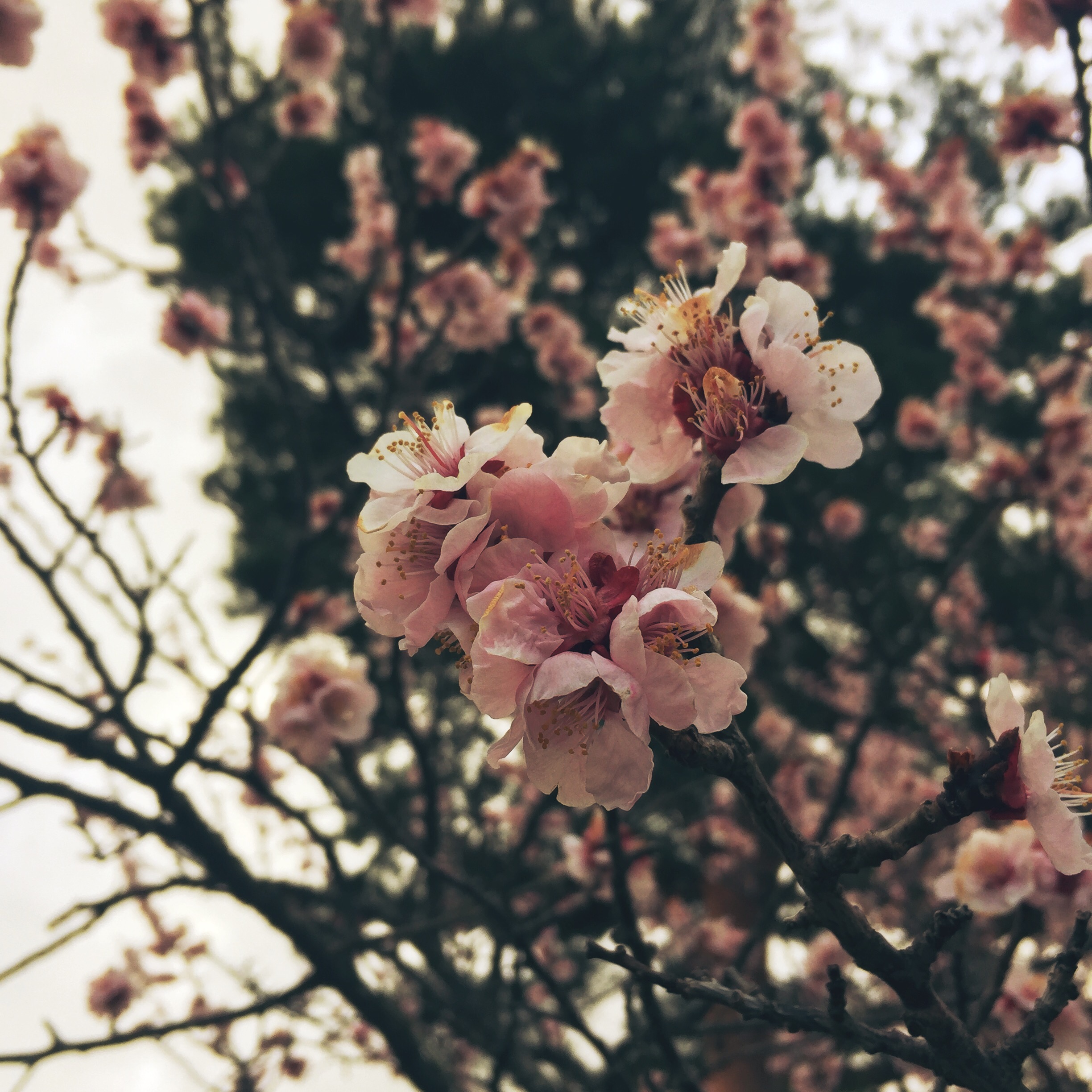
3. CHERRY BLOSSOMS

Since we planned our Japan trip around The Lumineers concert, it was a serendipitous discovery that our stay would align with cherry blossom season!  Bright pink trees lined the streets even in busy Tokyo.

1. Japanese Culture  

During the Meiji period Japan began to feel the pressure to industrialize.  Emperor Meiji highlighted the importance of retaining the Japanese culture as they transitioned from an isolated feudal country to an industrialized imperial world power.  Although this modernization resulted in drastic changes to Japan’s social, political, and industrial, constructs; the culture was retained.   105 years after the Meiji period the uniqueness of Japanese culture is still intact.

Tapos Na.

The month of May has now begun and summer is in full swing! I expect to be visiting the cold springs around my area quite often just to get some degree of relief from the summer ‘init’.

My Little Peace Corps Life: March 2017

A lot can happen in a month and my blog posts don’t cover everything! So here’s a segment called ‘My Little Peace Corps Life’. Each month I’ll post my 10 best pictures from the month with a little information. Enjoy:

1. Sunsets in the Situ

img_9567

I can almost guarantee there will always be a sunset picture in these segments!  Sunsets in the Philippines are gorgeous and always a little bit different.  This one is taken from my Host Situ.  After work, now that days are getting longer, I have time to walk to watch the sunset.  This picture was taken at the end of the sea wall.  The sea wall leads to a pasture with a few cows and the sea.  Around 6pm I’m the only person there besides the occasional fisherman or farmer passing through.  It’s peaceful and quiet and just what I need to close my day.

 Sunset Watching Pro Tip: Cloudy skies make more interesting sunsets than clear skies.

2. Rice Fields of the Provinces

img_9566

When riding the jeep through the provinces this is a common sight on either side of the highway.  I’m sure I absentmindedly took this picture while I was waiting for the jeep to go into the city.  The fields of green, and gold when the rice is about ready to harvest, are always looking so picturesque.

3. Recycled Crafts and Creativity

img_9568

While waiting for our fisherfolk to show up to a meeting in one of the Coastal Barangays we came upon these little critters.  A local creative soul created these little characters out of paper. 

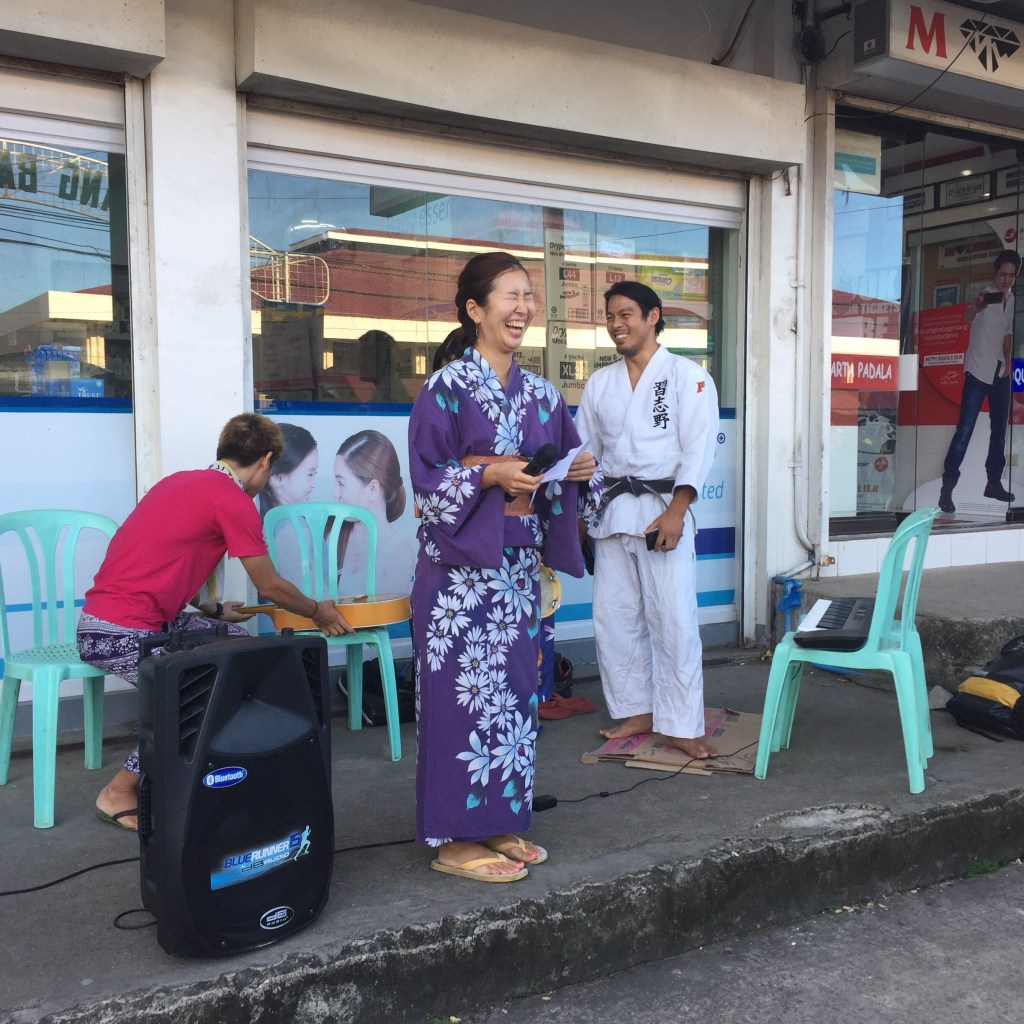
4. Yuri’s Cross Cultural Street Performance

img_9570

My Sitemate had a JICA (Japan International Cooperation Agency) Volunteer at her site who had been there for a year and a half when we arrived in September.  March seemed so far away back then, it was all too soon when her two years came to a close this past month!  Prior to her Dispidita, Yuri had to fulfill a life long dream: To give a street performance.  Since it’s far too embarrassing to do this in your home country, why not in a country you’re about to leave!?  So Yuri got to fulfill her dream in the little Municipality she called home for two years before returning to Japan.  The performance included a Japanese song, a Filipino song, and an English song, and a lot of laughter and pictures.

5. CHEL ~goes gardening~ under the SEA

img_9569

Coral gardening at a fellow Peace Corps Volunteer’s site was definitely a highlight this month!  My sitemate and I traveled an entire day to help out with this project.  We went snorkeling first to find pieces of branching coral that had broken off a gigantic reef.  This reef just below the surface of the water, looked like rolling hills of branching coral.  Then we SCUBA dove to transplant them to a reef in need of some sprucing up.  Hopefully the little corals will thrive there and help rejuvenate the reef.

6. My Big Chicken Coop

img_9573
In March I decided to move closer to work into my own apartment.  When I was getting ready to move stuff out my officemate asked my Host Kuya why I was moving out.  He responded that ‘Chelsea is like the chicken.  She was small, but now that she is grown, she can go around.  Of course she’ll come back to visit, but she can go around on her own now.”  Later he told me the word for grown chicken in Bicol is ‘Taree”.  So Taree Chelsea, moved into her own apartment. 

7. Working Overtime

img_9571

Moving out means I can work overtime!  My officemates and I accompanied some farmers bringing their harvest from the fields to a nearby Municipality’s saod.  Of course we had to take pictures for those pesky documentation reports.

8. A New Sunset Vantage Point

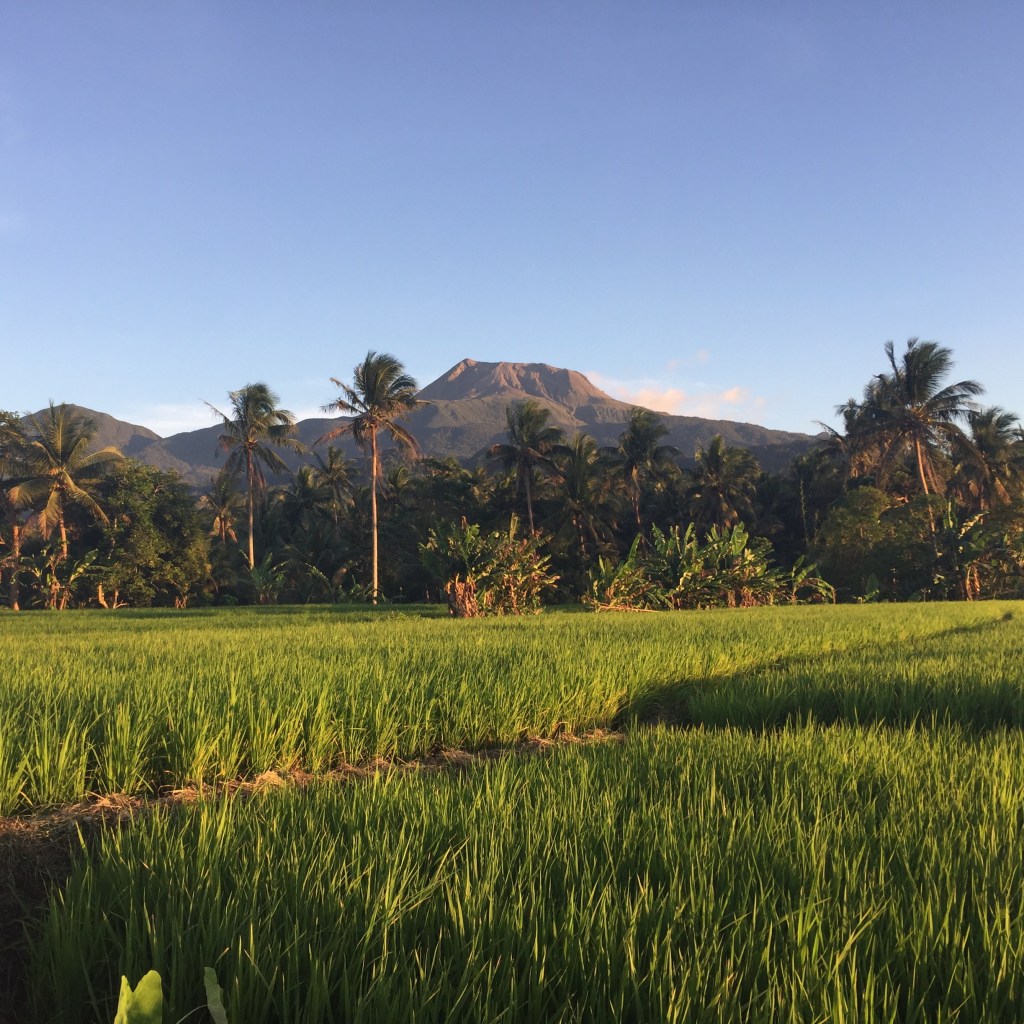
img_9574Turns out Volcanoes at sunset can be just as breathtaking as the sea!  Just as the sun sets it casts a golden hue over everything, and the topography of the volcano’s peak is illuminated by the unique angle of the sun.  A fun new sunset to add to my professional sunset watcher’s portfolio.
9. Tita Chelsea! Tita Chelsea!

img_9572

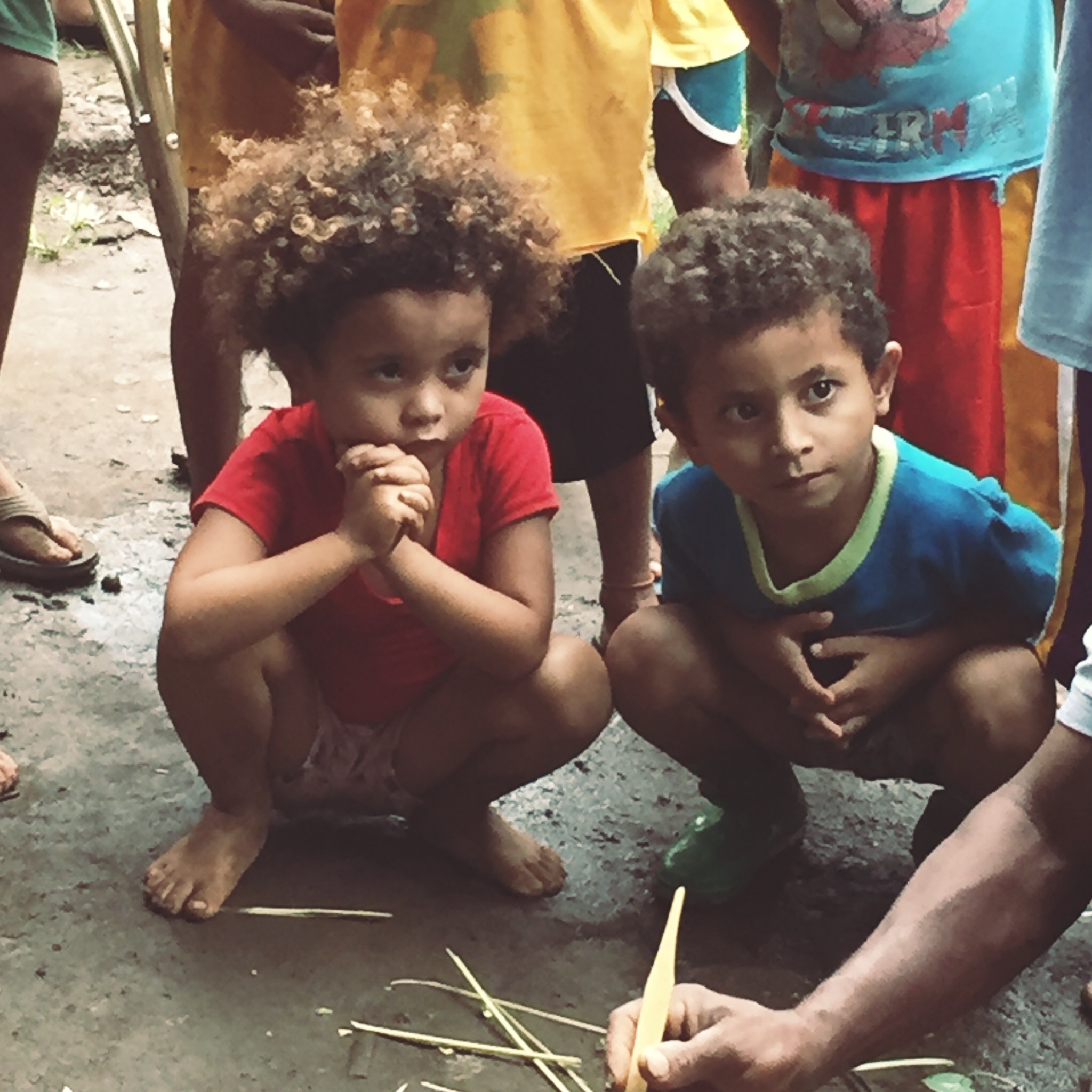
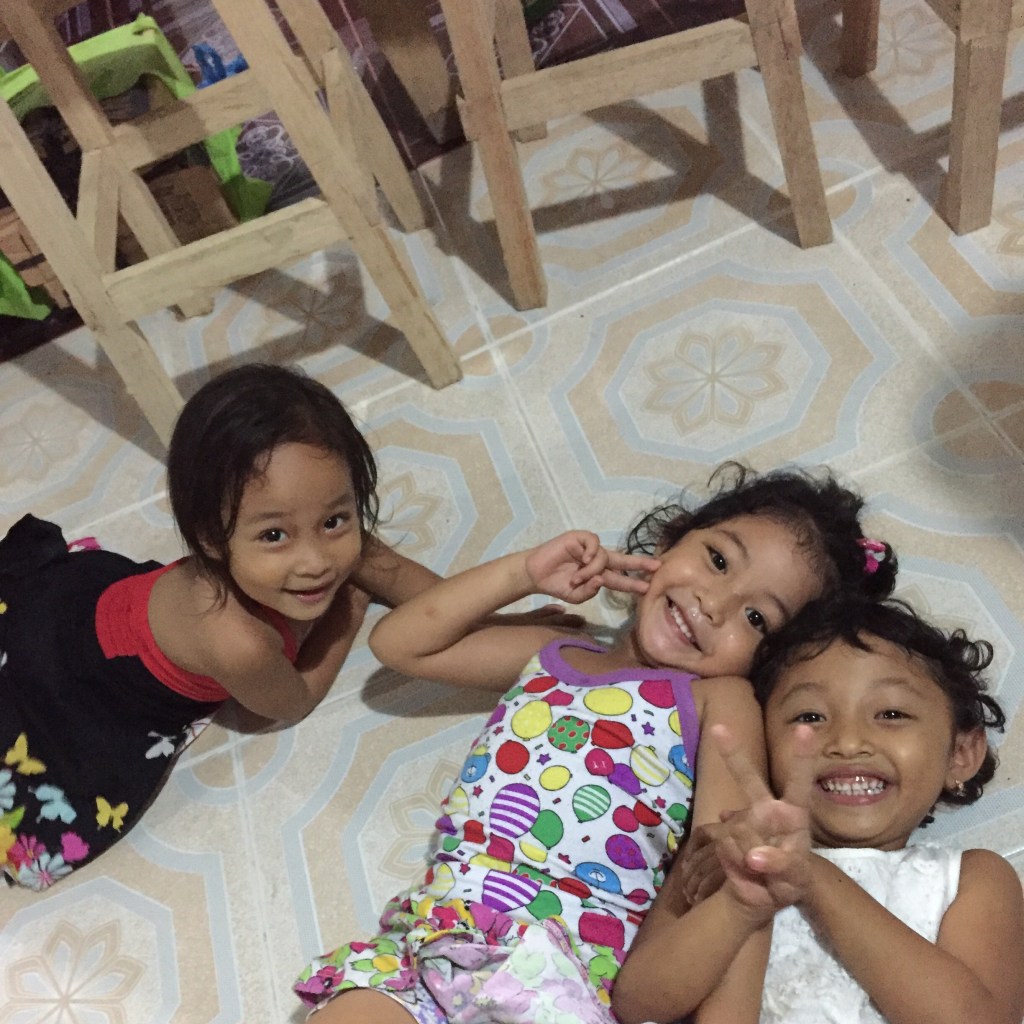
I of course returned back to my home Situ, like a good taree, and visited with my host family for a host cousin’s graduation.  Immediately I was welcomed and fed.  As I sat eating pansit, lumpia, ‘dirty ice cream’ and binuton my name ‘Tita Chelsea’ was sang from the stairs, from the street, from the floor and from the couches!  These three, along with the rest of my host family, made it feel good to be home!

10. Helping out and Doing Zumba

img_9575

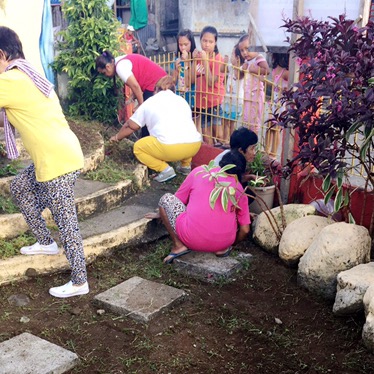
I’ve started helping out in the barangays my new home is surrounded by.  This weekend, after some 5:30am Zumba, we cleaned up the garden and potted some new plants to decorate the little coastal barangay streets!

That’s it for now!  Look out for this month’s segment of ‘My Little Peace Corps Life’.  With two trips planned for April I’m sure to have a hard time limiting my picks to just 10!


Peace Corps: A job, a lifestyle, a journey growing in unexpected directions

Taking a glance back at my blog posts I’ve come to realize I don’t talk much about my actual job.  I do in fact, have a job here!

My Job Description:

I’m a CRM PCV in the MAO of an LGU.  I work on PCRAs, CRMPs, IECs, and sometimes SWM, with MFARMCs, BFARMCs, POs, 4Ps, BFAR, DENR, DSWD and MENRO.

Makes sense right?

Your face right now.

The Philippines, and Peace Corps both LOVE acronyms.

In plain english.  I’m a Coastal Resource Management Volunteer, and I work in a Municipal Agriculture Office in a Local Government Unit of a Municipality.  I work specifically with the Fisheries Unit.  Agriculture is a way bigger deal here- which if you think about it is kind of odd considering they probably have more water than land, right?-  Anyways, Fisheries/Coastal Resource Management work is often split between different departments.  My counterpart is the Fisheries Unit, but offices like the Municipality Environmental and Natural Resources Office (MENRO) also work on Coastal Resource Management.

Okay, but what do you DO?

img_9395
The Bay

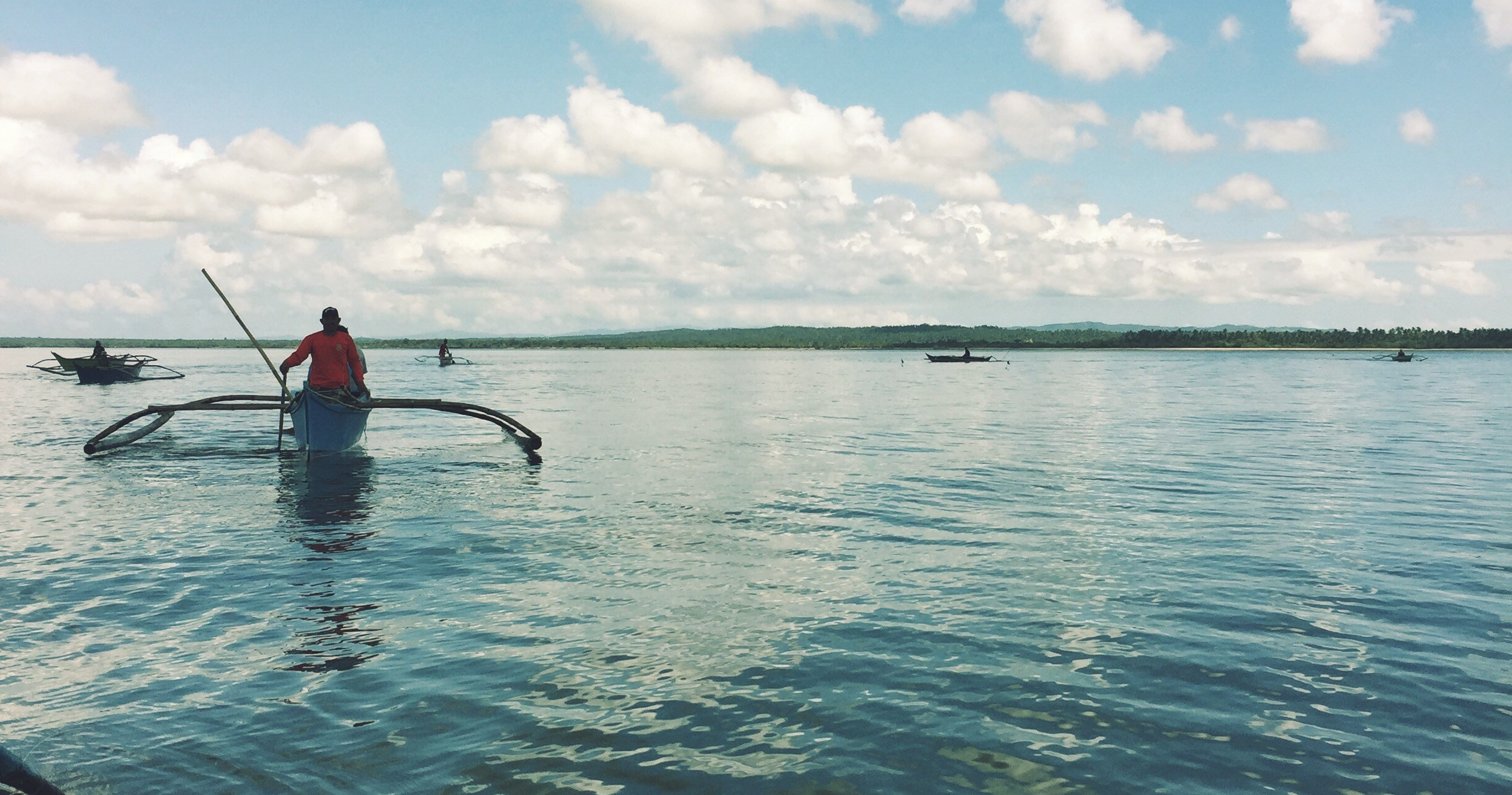
I live on an estuarine bay that is known for kasag (blue swimmer crabs), tahong (asian green mussels), and silag (anchovy), among others.  Our fisherfolk use a plethora of different fishing gears to raise or catch these different organisms.  As a major source of employment, as well as a major threat to the well-being of the bay, fishing must be appropriately regulated.  Fisherfolk also must be appropriately organized so they can make the most out of their fish catch, and protect their livelihood.  I try to help make this happen.

So many smiles!

BUT as a Peace Corps Volunteer my work isn’t just limited to the time I spend at a desk, in the mangroves, or under the sea.  As my sector manager reiterates, two of the three goals we have as Peace Corps Volunteers have absolutely nothing to do with my 9 to 5.  Peace Corps is also about being a point of cultural exchange for both Filipinos and Americans; and thanks to the internet and the growing presence of a global community I would say that my sharing of Filipino culture doesn’t stop at just Americans.

So here is what I do, as told through one of my more successful weeks at site.

Monday: I wrote communications to two of our coastal barangays about household interviews.  This is one of the first step in developing a Coastal Resource Management Plan for the Municipality.  

Our Coastal Resource Management Plan will outline problems identified by the community, a socio-economic profile of the coastal barangays, the status of our natural resources, and finally a plan to address problems and resource management for the next 5 years.  Putting together this document is a huge on-taking and has been one of my primary projects for the past couple months.  After these interviews we will conduct habitat assessments on our mangrove forests and seagrasses.  Then we’ll conduct participatory coastal resource assessments and we’ll hear from fisherfolk and community members where their resources are, and what they need.  All of those activities are just the data collection portion of this process.  

Tuesday: My Host Kuya explained to my officemates that I was ‘like the chicken’ as he helped me move to my new grown up chicken apartment closer to work.  He explained that I was moving because I’m ‘taree’ (a grown up chicken) now and I can roam around, but of course I’ll come back to visit the coop.

Wednesday: We conducted our household interviews.  There was such a great turn out that we ran out of response forms!

Thursday: I entered some of the data I collected from household interviews, but spent the better part of the day talking to my coworkers about Filipino and American culture.

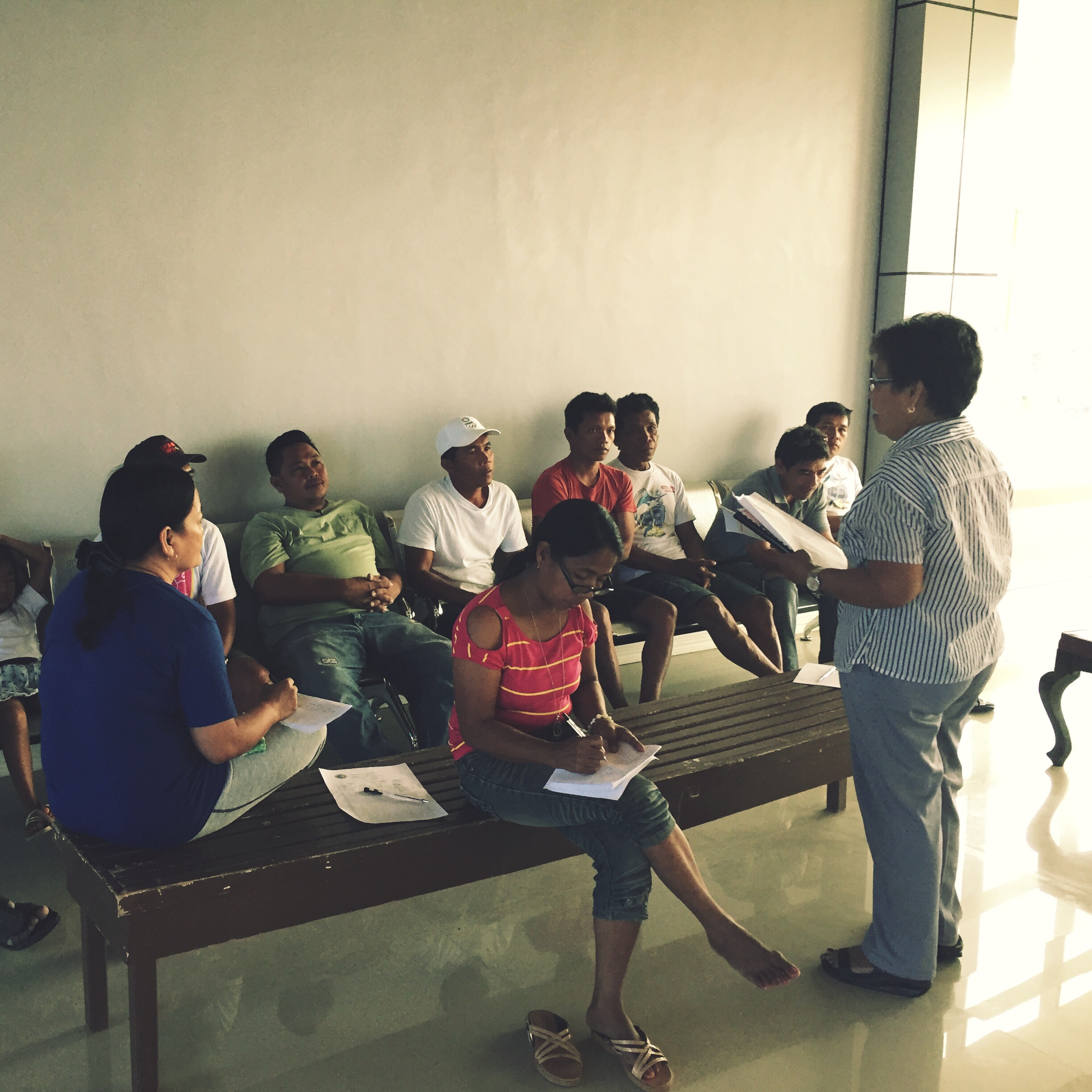
Meeting with our Municipal Fisheries and Aquatic Resources Management Council (MFARMC)

During these conversations I not only learn more about Filipino culture, but I also learn about American culture as it’s perceived and questioned by my Filipino friends.  It’s interesting to hear what pieces of information spark curiosity in a brain that is culturally wired so differently from my own.

I’ve gotten expected questions about American weather patterns, American holidays, and food preferences (“wait, walang rice?!”).  But I’ve also gotten unexpected questions like why Americans are so independent and do things like move away from home at 18, how is our police system organized (There’s only the Philippine National Police, no smaller departments like NYPD), how accurately American movies depict certain aspects of American culture, and what sort of crops we harvest.  

I have to admit some of these questions sent me running to Google!  The United States is a massive country it’s not easy to summarize our customs.  Crop harvest varies depending on the region.  What would you say the ‘american staple food’?  The common guess here is bread. 

So no matter what I’m doing whether I’m at my office or roaming around my Municipality, I’m constantly sharing my world, and the world is constantly sharing in return.  

Peace Corps tagline is ‘the toughest job you’ll ever love’ and it is such an accurate description of the job I have here.  Getting technical things done is tough when you don’t speak the language.  Working in a new environment takes adaptation.  Trying to understand an unfamiliar culture, demands acceptance that some things aren’t meant to be understood.  I spend many days having my views and personal opinions stretched and skewed by words, and actions.  This forces me to look at something I thought I knew, in an entirely different way.  It’s exhausting, and exhilarating.  

Sunset watching is definitely a part of my job description

Peace Corps is not what I thought it would be, nonetheless, I love my job more and more everyday.  It’s a tough journey I am proud to be on.  It’s an experience I know will leave me changed in ways I never imagined, and I look forward to every day as I grow in unexpected directions.

Pasko Na: The Season of Giving

My Municipality is believed to have gotten it’s name because the townspeople kept their young men and women in hiding to prevent them from being abused by the Spaniards.  Therefore, to an outsider, the town appeared to be comprised of only old people.  When Americans eventually came to the town they asked for it’s name.  The townspeople couldn’t understand what they were saying and assumed they were asking why no young people lived in the town.  

The people responded ‘kasi gurang’ (direct translation would be ‘because old’).

The Americans thought they were responding to their question, and left believing the town’s name was Kasi-gurang.  Today as the Gymnasium filled with almost every student ages 6-16 in the municipality, I recalled this story and thought how it must look ‘Kasi gurang’ outside.  

5,300 students excitedly awaited ‘Pamaskong Handog Para Sa Mga Kaakian 2016’ (Christmas Gifts for the Children) to begin.  The Honorable Mayor stood in the center of the gym, as Christmas music poured out of the speakers.  The crowd of children jittered in their seats so excitedly, it made even the sizeable speakers sound like a pair of headphones.  The air was thick with humidity (of course), but also with that special feeling that only appears this time of year, known to most as Christmas spirit.  As I watched the Mayor start ‘the wave’ around the gymnasium several times, and the kids squeal as he began to interact with the crowd, I was in awe of the energy that enveloped the room.  It was as if I had stepped off the Polar Express on Christmas Eve and Santa was greeting his crowd of elves. It’s beginning to look a lot like Christmas here. 

The Mayor gets up on stage and joins an intermission number

For the next 3 hours (yes, you read that right) the Mayor entertained the children by raffling off christmas gifts.  As he began to call the lucky numbers, each kid sat clutching their pink raffle ticket until the ink had begun to flake off and the paper was falling apart in their hands.  The grand prize was 50,000 pesos, and every kid was eager to bring it home to their families.  

To put this in perspective the average salary of the Philippines according to the International Labor Organization, is Php 13,901.18 per month.  Meaning this grand prize was over 3 and a half months worth of salary for the average Filipino.  

The average monthly salary in the United States is $3,263 (~$40,000/year), so for my american readers, at this pay scale the grand prize is the equivalent to winning just shy of $12,000.  
Again this is an average, the Philippines Statistics Authority reported the poverty rate (those whose income falls below the means necessary to provide food, housing, health and education) to be at 21.5% for the year of 2015, meaning that 50,000 pesos goes a lot further than 3.5 months for many of these children’s families.

Merry Christmas Mayor!

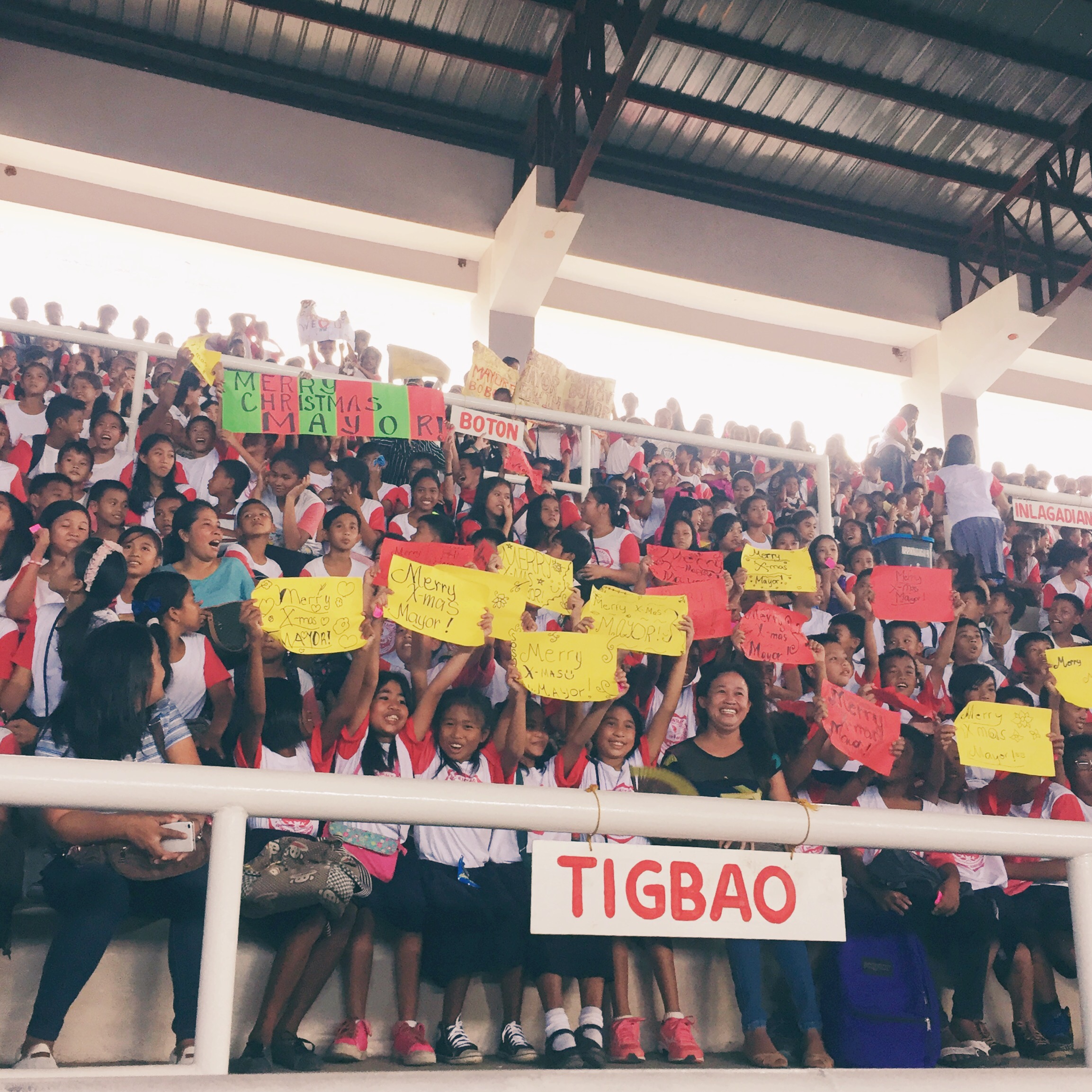
Upon the arrival of the grand prize announcement I couldn’t hear myself think above the cheering of the crowds.  They yelled so loud and stretched their arms up with their colorful signs painted with different phrases wishing the Mayor and his family a Merry Christmas.  All of them standing on their tip toes, with their shoulders drawn up to their ears, hoping that maybe if he saw their well wishes, he would somehow purposefully choose their number from the tumbling cage of 5,300 small clips of paper.  Upon reading the first number, no one claimed the prize.  

‘Wara?’ called the mayor to the crowd.  

To which they shouted back ‘Wara!’ and shook their hands in the air which is a common sign for ‘nothing’.

The Grand Prize Winners

A second number is called….

‘Wara?’

‘Wara!’

Finally a third number is called and the lucky winner runs down to the stage.  She’s a small girl of 11 years old and she doesn’t quite know what she’s just won.  She counts out the bills and is carted home to share her luck with her family.  

All in all, between intermission numbers and Apple-Pen-Pineapple-Pen dance breaks, the mayor gives out over 100 gifts including cellphones, rice cookers, and various denominations of money. All of the kids leave with a consolation prize of chichirria, and 20 pesos.  As everyone drains out of the gymnasium, some kids are carrying their winnings proudly, some are grumpy having lost, and most are running to spend their 20 pesos on more chichirria from the vendors outside.  They pile back onto the jeepneys to return to their perspective barangays and I return to work with my ears still ringing.  There is no doubt, the season of giving has arrived here in the Philippines.  Pasko na

Learning the Way

I’ve been in Casiguran for almost two months now but when my counterpart told me to finish up the tour of Casiguran’s Livelihood projects with our BFAR representative, while she attended to other business, my stomach dropped a little.

img_6755

Casiguran has a number of Alternative Livelihood Projects that have been funded by the Bureau of Fisheries and Aquatic Resources.  These projects are incredibly important in improving the quality of life for our fisherfolk, and helping them maintain financial security.  Alternative Livelihood opportunities allow people to learn new skills and diversify their income.  

Why must the fisheries sector diversify their income?

The Fishing industry is an extremely insecure industry.  Factors like climate change, population increase, and overfishing, among others, have caused a decrease in fish catch.  

Why don’t they just fish less?

Sounds easy right, just fish less.  This is much easier said than done.  Asking the fisherfolk to fish less is asking them to deprive their families of dinner and income.  But, when fishing grounds run dry, families also go hungry.

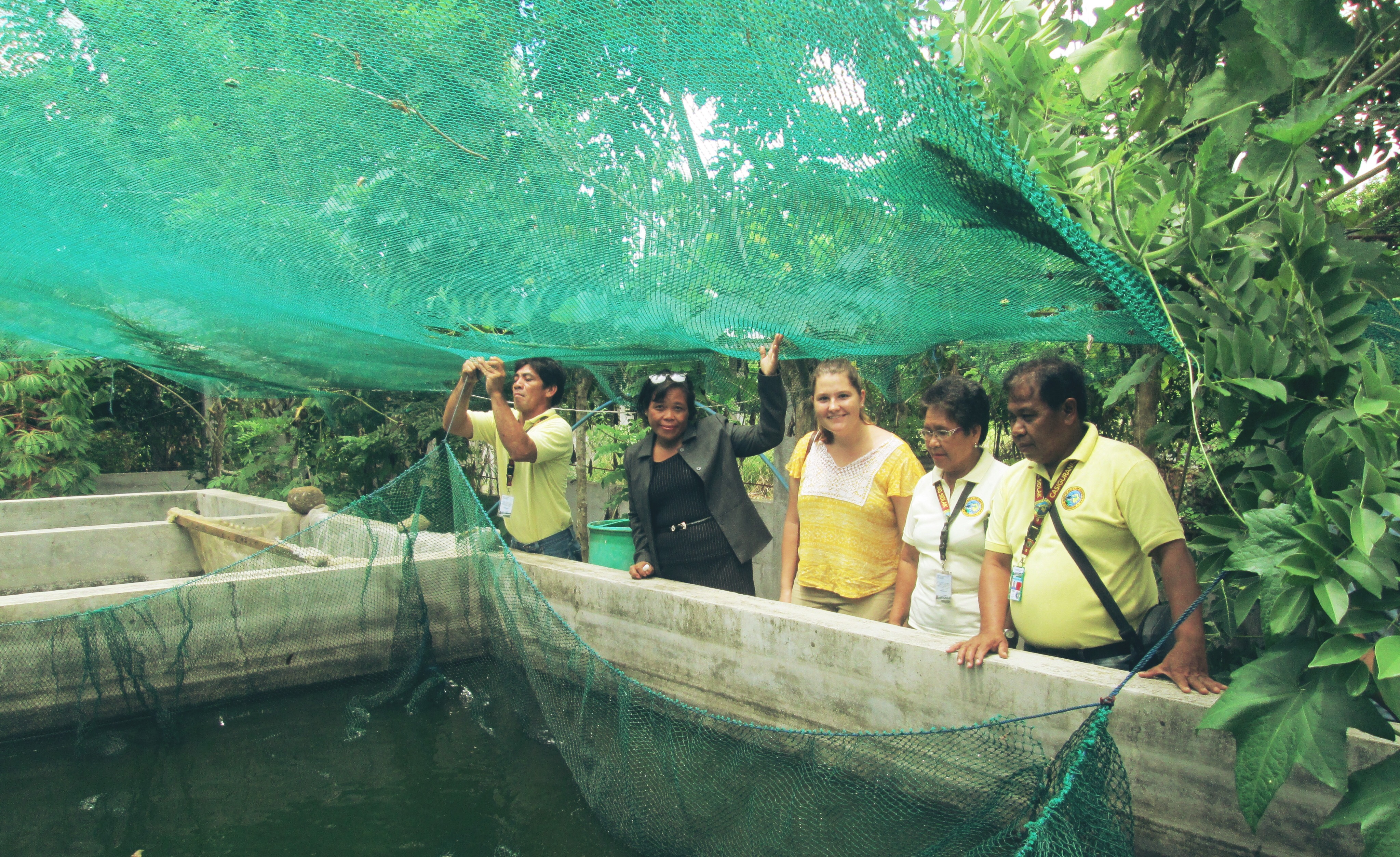
The beacon of light! Alternative livelihood projects!  These help reduce pressure on fish stocks and maintain financial security for the fisherfolk.  Our projects here include: a Municipal Tilapia Hatchery, a Post Harvest Facility enhancement project, and a Fisheries Products Value Adding Center.  These are all funded by BFAR and must be documented appropriately.  We had finished showing our BFAR representative, Gloria, the Municipal Hatchery when it was my turn to direct the tryke driver to our next destination, The Cawit Livelihood Center.

‘Cawit Barangay Hall po’ I say to the tryke driver.

We start down the road and I assume I’ve done enough.  Tryke drivers know Casiguran like the back of their hand, there’s no doubt he knows where a landmark like the Barangay Hall of Cawit is.

He passes the turn.  

‘Wait, wait!’ I raise my voice over the tryke’s motor, in english.  My Bicol proficiency is in no way reactive (yet) and it completely escapes me in times of urgency, ‘Cawit Barangay Hall!’

He stops the tryke and asks someone nearby ‘Hain an Cawit Barangay Hall?’

I think that I’m hearing him incorrectly; he doesn’t know where the Barangay Hall is?  Based on body language, and limited language skills, I piece together that he is definitely asking people for directions.  He doesn’t know where the Barangay Hall is, but I DO!  

‘I know, I know- er, aram ko, aram ko!’ He looks down at me like I’m a little bit crazy.  Granted, I probably look crazy, there are two Filipinos on the tryke but I’M the one trying to give directions.  I point behind me, ‘back that way.’ He turns around and heads towards the turn.

‘Tuo!’ I tell him to turn right.  He slowly takes the turn and slows again to ask someone.

‘It’s okay, aram ko, direcho!’ the woman from BFAR riding behind the driver is laughing now as I’m still trying to get the tryke driver to listen to me.  

‘Chelsea knows how to get there but the tryke driver does not!’ She is thoroughly entertained by the entire situation.

We continue, slowly, down the road and as we come up to another turn, still laughing Gloria asks ‘Which way Chelsea!’

‘Wala!’

For the first time in four months of living in the Philippines, I don’t feel like the visitor.  We turn left and pull in front of our destination. ‘Para, para po, right in here’

img_6757

These are the little moments we were told about during training.  Realizing you actually aren’t a giant stumbling two year old, and CAN manage basic life-sustaining transactions!  It’s so exciting!  Before Peace Corps, if you told me that knowing how to give directions in a small town would make me feel so accomplished I would have laughed.  I still laugh, it’s hysterical that this makes me feel so great but hey, I’ll take it.

The Cawit Livelihood Center is a small house that serves as a Value-Adding Facility.  The women who work here are Cawit Fisherfolk.  They have been trained on different ways of preparing fish in order to help fisherfolk make more money off of their catch.  They can also debone Silag (anchovy) faster than anyone I’ve ever met.

img_6758

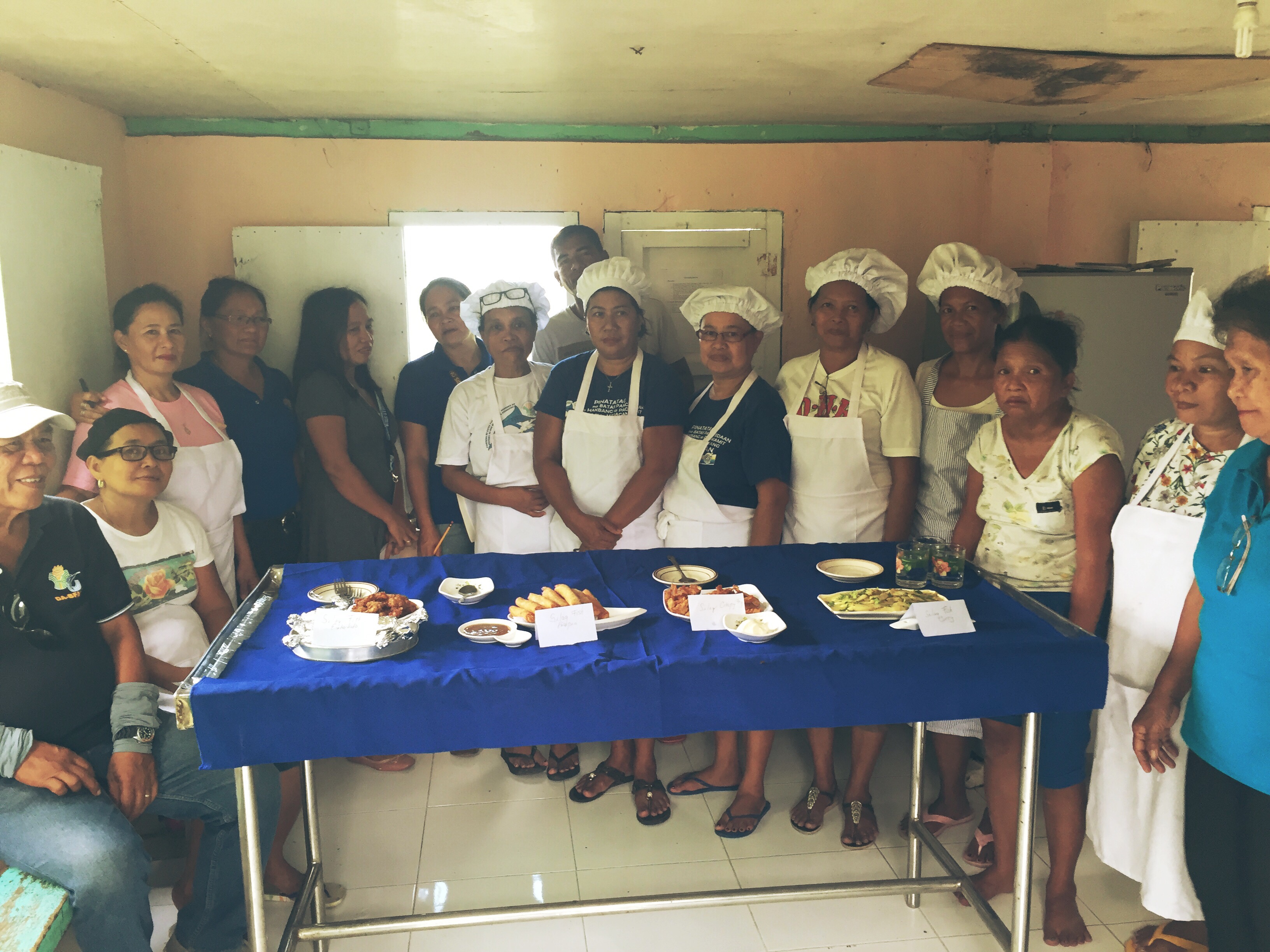
A few weeks ago, the center was in full action during our Fish Conservation Week.  There was a fish deboning competition where the winner deboned 175 silag in 15 minutes.  After that there was a cooking contest.  My Grandpa would be pretty happy to hear that I ate an absurd amount of anchovies that day. Fried silag, silag lumpia, silag curry, these women know how to cook fish!  

I recognized the women as they showed Gloria around their little facility and I felt comfortable in the familiarity of it all.  I’m a homebody, but I love the challenge of finding that comfort while traveling.  Building that settledness is rewarding, and perpetuates my love of travel and living abroad.  Come visit, I know the way! 😉  

img_6756

8 Little Habits You Didn’t Know Were Different on the Other Side of the World

It’s been a while hasn’t it, the past couple weeks have been busy but there is a treat at the end if you’ve been missing my writing. Enjoy!

img_6534

Every culture has little habits that are so ingrained in its people’s behavior that the actors don’t think for a second, that those actions may be performed differently in other parts of the world. While I’ve begun to learn about the habits of my corner of the Philippines, I’ve also started learning which of my habits are unique to the United States.

  1. Fork and Knife or Spoon and Fork?

img_6529

In the United States meals are typically eaten with a fork and knife. In the Philippines, meals are eaten with a spoon and fork, with the spoon being used more prominently than the fork—if they use silverware at all. It’s also very common to ditch the silverware all together and eat with ‘mga kamot mo!’ or ‘your hands!’

  1. What you’re looking for is just over there!

img_6536

Pointing in the Philippines isn’t done with your hands; it’s done by puckering your lips.

  1. ‘No shoes in the house’ isn’t just Mom’s rule!

img_6535

Every house here has a pile of shoes at the door. Wearing shoes inside is very uncommon. So kick off those zapatos at the door! Unless, they’re house tsinelas of course.

  1. Every day is an umbrella day.

img_6538

In the USA, umbrellas are for rain, and big umbrellas are for beaches and porches. But here, umbrellas are carried, and used, at all times. The Pinoy Sun is intense! Umbrellas are used to shade people from those extreme rays. I can personally tell you this is a worthwhile investment. Even short trips outside can result in sunburn!

  1. Sit, rest muna!

img_6532

This is a common, and comfortable, sitting position for Filipinos young and old! If people are sick of standing, watching an event, fixing a tryke, or even cooking they’ll just take a squat. Is there a United States equivalent for this?? Let me know below if you think of one!

  1. Can I get through a post without mentioning eating?

img_6530

No, no I cannot. But anyways, by bunching your fingers together (similar to ASL for ‘eat’) and touching your cheek you can communicate a number of things about eating. Depending on the context, this can mean ‘have you eaten?’, ‘come eat!’, or ‘we are eating.’

  1. ACHOO-EY

img_6533

S/O to my Dad who sneezes like that. In the United States we usually say ‘bless you’ after someone sneezes. This is not practiced in the Philippines. Most people don’t say anything. Sometimes I still say ‘bless you’ instinctively, can’t kick all those American habits!

  1. But what’s your nickname?

img_6537

In the United States, if someone prefers a nickname over their actual name, they’ll usually tell you upon introducing themselves.  I don’t have any preference on what people call me so when I was asked  ‘what is your nickname?’ I said I didn’t have one.  I received confused looks and was asked a few more times ‘but, what’s your nickname?’. I now understand those looks because EVERYONE has a nickname. I now I have many many nicknames, Chee and Chels are the most common (at the moment).  This can make things complicated when someone is addressing me, I have to listen for so many different syllables and versions of my name!

What other countries have you encountered that uphold these habits? Which countries don’t? What are some habits you’ve noticed elsewhere? Let me know, comment below!

AND AS PROMISED: Bonus Post! I recently wrote an article for the blog Travel Belles. The article is 10 tips for adjusting to life in a new country, check it out here, and pass it along to anyone who might find it helpful!